

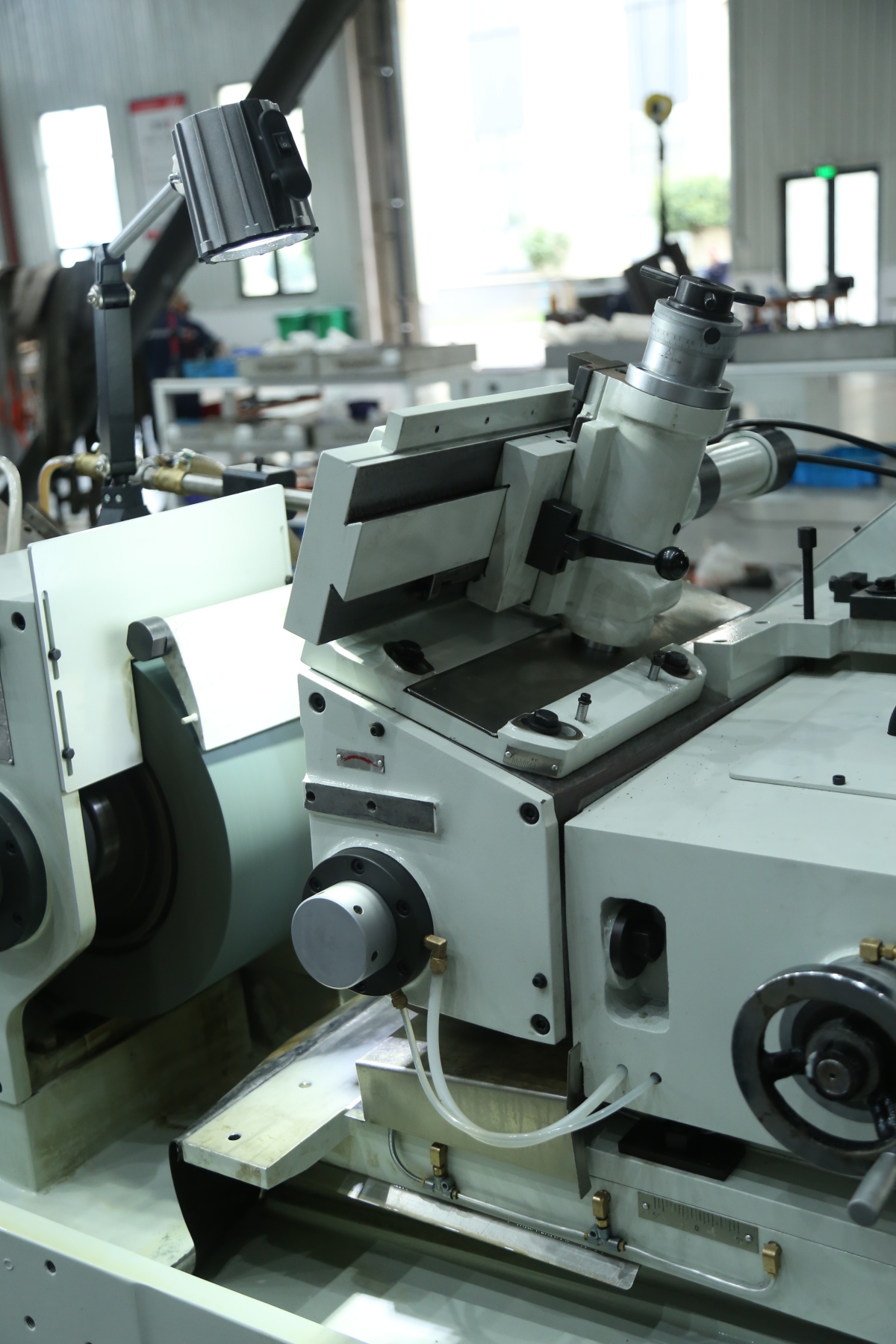
The typical automotive buyer is a Tier 1 supplier, a transmission plant, an engine component manufacturer, or — increasingly — an EV motor shaft producer. These customers run high-volume lines where a single out-of-tolerance part can stop an assembly plant. They need diameter consistency measured in microns, roundness below a micron, and cycle times measured in seconds per part.
Representative parts include transmission pins, wrist pins, valve lifters, injector nozzle needles, plungers, balance shafts, and input/output shafts. With vehicle electrification, motor shafts and drive-actuator screw components have become fast-growing new applications.
A high-precision transmission pin line suffered from unstable roundness CPK. The rejection rate reached 6%, causing serious delays to the gearbox assembly delivery schedule. The original centerless grinder and conventional grinding wheel could not hold consistent micron-level roundness in mass production.
The plant switched to a high-performance vitrified diamond/CBN centerless grinding wheel, recalculated the force model, set the work rest blade angle to 30°, raised the workpiece center height by precisely 0.15 mm, optimized CNC dressing parameters with a compensation algorithm, and repositioned high-pressure coolant nozzles.
Roundness CPK unstable
Rejection rate: 6%
Frequent dressing stops
Assembly line delays
Roundness stable at 0.0006–0.0009 mm
Rejection rate: < 0.05%
Dressing interval extended 300–500%
Per-part grinding cost down 22%
Volume: Through-feed mode runs hundreds of parts per minute with automatic bar or magazine feeders.
Consistency: Full-length blade support eliminates deflection and delivers uniform diameter across thousands of parts.
No center holes: Saves a prior operation — critical for small pins and needles where drilling a center hole is impractical.
Cost per piece: At high volume, centerless grinding is typically the lowest-cost precision OD finishing process.
Bearing manufacturers are the largest single consumer group of centerless grinding machines worldwide. They produce cylindrical rollers, tapered rollers, needle rollers, and bearing rings (inner and outer races) for applications from automotive axles to high-speed trains (e.g., Shinkansen) to wind turbine gearboxes. Every roller and race must meet extreme roundness and surface finish specs because friction, heat, and seizure depend on it.
Rollers: Cylindrical rollers, tapered rollers, and needle rollers are almost universally ground on through-feed centerless grinders. A typical cylindrical roller might be 10–50 mm in diameter and 20–80 mm long. For finish grinding, manufacturers use white fused alumina (WA) 80#–120# vitrified wheels with rubber-bonded regulating wheels. The through-feed method creates a uniform cylindrical diameter along the entire roller length.
Rings: The outer diameter of inner and outer bearing rings is often through-feed centerless ground to ensure correct ovality and to remove surface defects left by the hardening process. The raceway itself may be pre-shaped by turning and then finished to final roundness and tolerance.
There is no "universal" grinding wheel for bearing production. Rollers, rings, and different bearing types (CRB, NRB, TRB, SRB) each require a dedicated abrasive grain, bond, and grit combination. Bearing manufacturers work closely with wheel suppliers to engineer process-specific consumables.
Volume economics: Bearing production runs into millions of pieces; only centerless through-feed delivers the required throughput.
Geometry match: Rollers and ring ODs are simple constant-diameter cylinders — the ideal through-feed geometry.
Roundness & finish: Bearing performance (friction, heat, fatigue life) depends directly on roller roundness and surface quality.
Automation: Easily integrated with bowl feeders, conveyors, and in-process gauging for lights-out production.
Medical
Medical device OEMs, orthopedic implant manufacturers, cardiovascular device companies, dental instrument makers, and ISO 13485–certified contract manufacturers (CMOs) buy centerless grinders. These customers operate under FDA-validated or CE-marked production systems with embedded statistical process control (SPC) and complete manufacturing documentation. For them, a single out-of-spec component is not just a scrap cost — it is a patient safety issue.
Materials: Titanium, cobalt-chrome (CoCr), nitinol, stainless steel, carbide — many are difficult-to-grind alloys.
Traceability: ISO 13485 requires per-batch SPC data, wheel dressing records, operator logs, and full route card documentation.
Clean production: Dedicated grinding cells to avoid cross-contamination between material grades or product families.
Validation: FDA-validated processes with IQ/OQ/PQ documentation and change-control procedures.
Slender part support: Parts with length-to-diameter ratios above 10 (guidewires, needle shafts) cannot be reliably held in chucks or between centers. Full-length blade support is the only practical solution.
Batch consistency: Disposable surgical tools (staplers, biopsy instruments) require identical geometry across every unit — centerless grinding delivers that consistency at volume.
Surface quality: A mirror finish (Ra 0.02 µm) on a puncture needle directly reduces tissue trauma and patient discomfort. This level of finish is routine on a well-set-up centerless grinder.
Micron-level diameter control: For guidewires, the difference between 0.014 in and 0.0142 in can determine whether a wire navigates a vessel — centerless grinding holds that level of control.
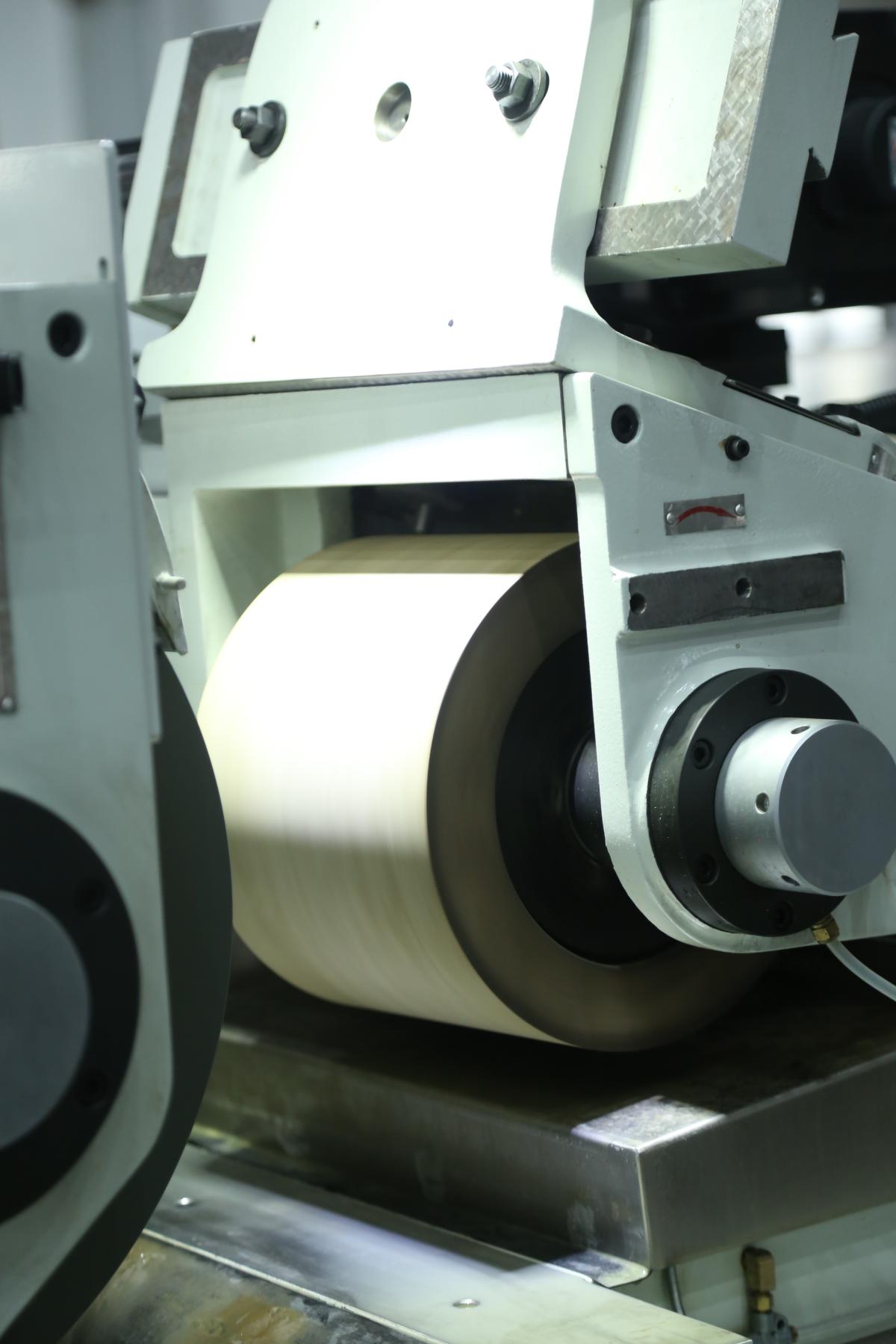
Despite very different parts and regulatory environments, automotive, bearing, and medical buyers converge on centerless grinding for the same three reasons:
| Decision Factor | Automotive | Bearing | Medical |
|---|---|---|---|
| Part geometry | Constant-diameter pins, shafts, needles | Rollers, ring ODs | Needles, wires, implant rods |
| Batch size | 10k–millions | Millions | 1k–100k+ |
| Key precision | Roundness, diameter consistency | Roundness, ovality, surface | Diameter, surface finish, traceability |
| Typical tolerance | ±0.002–0.005 mm | ±0.002–0.005 mm | ±0.001–0.005 mm |
| Why centerless | Low cost / high volume | Only process for roller volume | Slender-part support + finish |
| Regulatory burden | IATF 16949 | ISO 9001 / customer specs | ISO 13485 / FDA |
The common thread: simple cylindrical geometry + high volume + diameter/roundness accuracy. If your part checks those three boxes, centerless grinding is almost certainly the right process — regardless of industry.
Answer these five questions. If you answer "yes" to four or more, a centerless grinding machine is likely your best solution. Two or fewer "yes" answers suggest cylindrical (OD) grinding or another process may be more appropriate.
Automotive buyers need speed and cost; bearing buyers need volume and consistency; medical buyers need precision and traceability. These are different priorities — but all three industries arrive at the same answer: centerless grinding. The SEAT Componentes case shows what is possible when the machine, wheel, and process are optimized together: roundness held below 0.001 mm across 50,000 parts, rejection under 0.05%, and cost down 22%.
If your parts are cylindrical, your volumes are real, and your tolerances are tight, you are in good company — the same industries that build cars, bearings, and medical devices have already made that choice.
Send us your part drawing or sample specifications. Our application engineers will evaluate your geometry, recommend the right machine configuration and grinding wheel, and provide a cycle time and cost estimate — usually within one business day.
Request a Free Application EvaluationEste site usa cookies para garantir que você tenha a melhor experiência em nosso site.
 English
 Español
 Pусский
 العربية



 Telefone
Comente
(0)